The Role of Driver in Digital Economy Era
The Role of Driver in Digital Economy Era
In my very first blog, I will be examining how the concepts of ‘The Internet of Things (IoT)’ and ‘Collaborative Economy’ in digital economy have impacted and changed job roles. I will also examine how these roles will change in the future, using the example of drivers and the well-known ride hailing company, Uber.

To begin with a brief introduction, Uber is an American multinational ride-hailing firm providing services that include ride service hailing, peer-to-peer ridesharing, food delivery (Uber Eats), and micro-mobility system with electric bikes and scooter, and its main platform is mobile apps (Uber: Cities, 2020). Uber can be seen as a typical ‘IoT’, as Viswanathan’s (2011) argument may inspire us, that the purpose of ‘IoT’ is to enrich life by creating more intelligent connections between devices and people. Through its digital mobile platform (sensor device), Uber has managed to connect passengers with drivers by broadcasting their locations to a ‘back end’ system operated by Uber in its cloud. The cloud service then uses data analysis to determine which combinations of driver/car and passenger are most relevant to each other for the service request (Smart Industry, 2016). Such disruptive change has brought about a positive change for drivers, as the traditional taxi drivers would spend a significant proportion of each hour waiting their next passenger. However, Uber has changed the game through an algorithm offering its drivers much less time waiting each hour and more flexibility on their life-work balance. Moreover, it is very interesting to see that because of such innovative and disruptive change, the role of a driver is no longer merely someone who gives rides for the passengers, meanwhile, they can also be a deliveryman. Uber Eats has allowed to merge the two identities within the industry of taxi and logistics, if we think broadly.

Uber is also a representation of the collaborative economy. Martijin argues that the collaborative economy encompasses things such as ‘sharing economy’ (the sharing of things), gig economy (the sharing of labour), and crowdfunding (the sharing of money) (Razavi, 2018). Unlike the traditional taxi business model, where the taxi companies have the ownership of enormous amounts of cars as the assets, which were once considered essential and required large amount investment within the industry, Uber has allowed drivers all over the world to earn money by giving passengers rides in their own cars rather than the taxis allocated and owned by the taxi companies. Through sharing individual cars, the ‘driver’ has no longer been seen as a job role for a specific group, but that everyone can have the identify of being a driver. When each one who owns a car can be a driver, their cars as the assets can be utilized not only for themselves, but also for others, and thereby reducing the needs for people to buy their own, which will be greatly beneficial to the environment. Under such implication, through changing the role of the driver, the digital economy will bring positive influences on the highly salient topics such as climate change, environmental protection, and sustainability development.
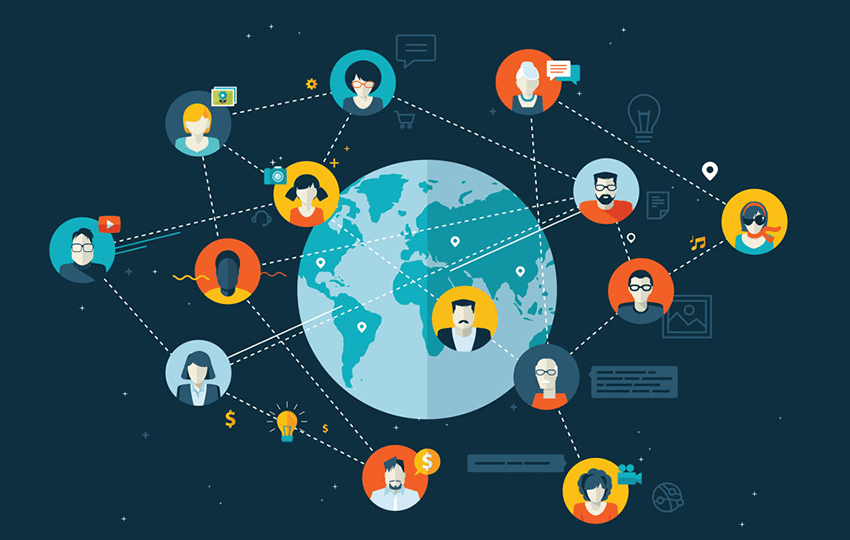
Now that we’ve discussed the huge changes and benefits that Uber as one of the representations of digital economy has brought to both the role of driver and to the world, what will Uber be in the future, and how is the role of driver likely to be changed as a result? IoTHome has analysed that Uber will be an embracive ‘IoT’ that contains Cloud Storage, Artificial Intelligence, Digital Money, Audiovisual function and Internet of Vehicles (IoV) (IoTHome, 2016). Under such assumptions, the functions of the role of driver will be tremendously decreased, because technologies can do almost everything instead. I, once, had a discussion with a driver while I was taking the taxi here in Exeter, the U.K., of what he considered if in the future technologies would cope with everything and people would all take ‘the sharing cars’? He said, ‘I don’t think people will not take taxi any more in the future, because there’s one thing that technology cannot do but we can, which is creating an enjoyable conversation with the passenger, like what we are having right now.’ This taxi driver’s mind inspired me that the role of driver as a job in the future would need to be more caring and connecting with their passengers, as these attributes involve human and emotional input, which technology cannot offer. Ernest Wilson also suggested that companies are seeking employees that excel in soft skills in the digital economy era. He listed 5 skills according to his research as can be viewed from the below video. (HBS Online, 2017)
By the above arguments, we may conclude that Uber as a representation of ‘IoT’ and ‘Collaborative Economy’ has disruptively changed the traditional role of driver whilst also bringing about remarkable benefits to the drivers, the world economy, and the environment. However, resulting from the continuous evolvement and development of technology, drivers may need to have more emotional and humanistic input, as well as soft skills, to adapt to the professional needs in the future of digital economy era.
References List:
Business Insider. (2019) ‘How to check your Uber passenger rating, and improve it if it’s low’. Retrieved 11, 02, 2020 from https://www.businessinsider.com/how-to-check-uber-rating?r=US&IR=T
HBS Online. (2017) ‘The 5 Skills Employers Seek in Today’s Digital Economy’. Retrieved 11, 02, 2020 from https://www.youtube.com/watch?v=uYsWo4nO4GE&feature=youtu.be
IoTHome. (2016) ‘Uber, a ubiquitous digital mobile IoT’. Retrieved 11, 02, 2020 from https://www.iothome.com/tech/platforms
Institute of Entrepreneurship Development. (2018) ‘Collaborative economy and its impact on social inclusion’. Retrieved 11, 02, 2011 from https://ied.eu/project-updates/collaborative-economy-and-its-impact
Lauren Razavi. (2018) ‘How digital platforms are creating an economy built on collaboration’. Retrieved 11, 02, 2020 from https://eureka.eu.com/innovation/sharing-economy
Smart Industry. (2016) ‘IoT Car: The Internet of Things is Already Here and its called Uber’. Retrieved 11, 02, 2020 from https://www.smart-industry.net/iot-car-the-internet-of-things-is-already-here-and-its-called-uber
Towards Data Science. (2019) ‘IoT in action’. Retrieved 11, 02, 2020, from Uber: Cities. Retrieved 11, 02, 2020 from https://www.uber.com/global/en/cities
Uber: Cities. Retrieved 11, 02, 2020 from https://www.uber.com/global/en/cities
 Business & Digital Life
Hi George, I really enjoyed reading your post about how the role of drivers is going to change, specifically the roles of taxis. I agree with your argument that the development of technology has placed the role of the traditional driver under threat. However, would you not agree that in order to overcome this threat more needs to be done than just an increase in the soft skills of the drivers themselves? Due to the vast implications that these technological advancements might have on taxi drivers, personally, I would argue that the government would need to play a larger role in regulating the industry to soften the negative effects of these changes. This would take the pressure off of taxi drivers who maybe struggle with the more humanistic aspect of their job but would also allow them to stay in work.
赞Liked by 2 people
Thank you for your comment, Will!
Indeed, I do agree that except the soft skills, there are more things needed to be done by different parties such as government. For example, a news piece issued on the 27th of November, 2019, saying that London’s transport authority banned Uber for a second time, citing concerns about customer safety after vulnerabilities in the app let drivers fake their identities in thousands of rides (Fortune, 2019). When I posted this blog, I took it for granted that it was essential to have the professional moral to be a taxi driver in the digital economy. However, in fact, it seems like the professional moral is still a shortage for Uber or other digital taxi drivers in certain cases. In addition, similar problems have also occurred in China as far as I know. Under such circumstances, I do think that the governments all over the world should pay more attention on this issue and play a larger role in regulating the industry as well as the profession of drivers, as they tend to be taking more and more parts in people’s lives.
Thank you for the complementary consideration, Will!
Lanxon, Nate & Thomson, Amy. (Fortune, 2019). ‘Uber’s London Ban May Just Be the Beginning of a Global Ride-Hailing Backlash’. Retrieved on 11.02.2020 from https://fortune.com/2019/11/27/uber-london-ban-global-ride-hailing-backlash/
赞赞
After having read this blog, I totally agree that emotional interaction is something that technology cannot imitate. I have ridden with Uber for many times, and the conversations with drivers has been enjoyable. However, at the same time, technologies are becoming more advanced and learning quicker than human. So, I assume that technologies may have abilities of learning some of soft skills in the future, such as adaptability and intellectual curiosity. On the other hand, safety issue is important for vulnerable people, such as women and kids. In China, there were some female passengers killed by Didi drivers. We all know that using ride-hailing services through digital platforms has become the main trend because of its convenience and flexibility. Nonetheless, is there a better way to reinforce passenger’s safety?
赞Liked by 1 person
Hi Ysheir, thank you for your comment! Yes, the safety concern for both customer and taxi driver in digital economy era is indeed a problem needed to be consummated yet. As what has been discussed within Will’s comment, the government may need to impose relevant regulations upon the industry. Otherwise, it might be a good way to ban those digital taxi applications like Uber temporarily, as what UK government is doing. You may find this below article useful of how the government treats Uber so far. https://fortune.com/2019/11/27/uber-london-ban-global-ride-hailing-backlash/
Thank you so much for the inspiring comment, Ysheir!
Lanxon, Nate & Thomson, Amy. (Fortune, 2019). ‘Uber’s London Ban May Just Be the Beginning of a Global Ride-Hailing Backlash’. Retrieved on 11.02.2020 from https://fortune.com/2019/11/27/uber-london-ban-global-ride-hailing-backlash/
赞赞
Hi, George! The content of your blog is well logically organized ,and it has triggered me to think further about the impact of technology advancement on future transportation. I strongly agree that the communication between drivers and customers can meet human’s emotional need, and it seems that machine can not replace drivers in terms of this aspect. However, many countries are exploring the solution of automatic transportation and investing more in IOV infrastructure. So, automatic transportation is getting closer to our future life. In addition, people are researching how to use machine learning techniques to establish a human-computer interaction chat system. Maybe this system can replace the drivers to chat with customers to some extent in the future. If automatic transportation comes true on one day in the future, how will drivers be influenced on their career path? If there will be a negative impact on drivers’ career path (e.g. losing jobs), how will the government need to do to help drivers to overcome facing challenges?
赞Liked by 1 person
Hi Tianyi, thank you so much for such a technological point of view of comment! I’ve heard the relevant information about the automatic transportation and machine learning, which are being researched and developed nowadays. However, honestly, this is a bit far more beyond my limited knowledge to answer your questions, although I really think they are quite interesting and worth to be considered! I believe that with the technologies keeping being updated and regenerated, governments all over the world would need to take this potential seriously. We like to see what our future is and how we can get alone well with the technologies in the future!
赞赞
Hello George. I very much agree with what you said: if drivers want to keep their profession in the future, they need more emotional, humanistic input and soft skills. At present, many taxi companies are limited in terms of entry requirements: driving age, vehicle ownership, criminal records, and household registration. There is no hard requirement for the driver’s cultural level and personal quality. In addition, due to the development of big data and network information technology, even if the driver does not know the road, the driver can pick up and drop off passengers to a designated place through a positioning and navigation system such as GPS. Such a low threshold for entry has drastically increased the number of drivers, and the industry is under great pressure from competition. Therefore, it is easy to have problems such as rushing for orders, deliberately detouring, and low-priced vicious competition to damage the market. To keep the driver profession, these problems need to be solved, right?
赞Liked by 1 person
Hi Xiyao! I really like your comment and those inspiring ideas with regard to the regulation within the sharply rising power of digital economy. I do agree with you that those problems you’ve mentioned are very worth to be solved as soon as possible, in order to keep the drive profession ‘healthy’ and ‘friendly’. Technology should bring us convenience but not conflicts. Indeed, those digital taxi businesses need to impose more clear and useful regulations to solve those problems. Thank you so much for such a great comment, Xiyao!!!
赞赞